
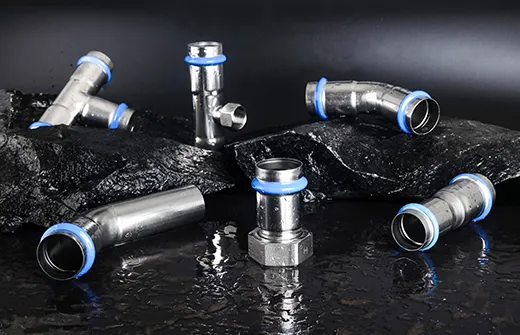
Press Fittings vs Traditional Methods: A Comprehensive Comparative Analysis in Construction
Jul 19,2026
Press Fittings vs Traditional Methods: A Comparative Analysis
Table of Contents
- 1. Introduction to Press Fittings and Traditional Methods
- 2. Overview of Press Fittings
- 3. Overview of Traditional Methods
- 4. Advantages of Press Fittings
- 5. Disadvantages of Press Fittings
- 6. Advantages of Traditional Methods
- 7. Disadvantages of Traditional Methods
- 8. Cost Comparison: Press Fittings vs Traditional Methods
- 9. Safety Considerations in Construction Methods
- 10. Future Trends in Building and Construction
- 11. Conclusion
- 12. Frequently Asked Questions
1. Introduction to Press Fittings and Traditional Methods
In the construction industry, efficiency, cost-effectiveness, and reliability are paramount. Two prominent methods for joining pipes are **press fittings** and **traditional methods** such as welding and soldering. Understanding the nuances between these techniques can significantly impact project outcomes. This article delves into the advantages, disadvantages, and unique features of each method, providing a thorough comparative analysis.
2. Overview of Press Fittings
Press fittings are modern mechanical connectors used to join pipes without the need for welding. This method utilizes specially designed fittings that can be quickly and securely joined using hydraulic or battery-powered tools. Made from materials like stainless steel or copper, press fittings offer a durable and leak-proof connection.
The process is straightforward: the fitting is placed over the pipe, and a pressing tool compresses the fitting around the pipe to create a permanent seal. This technique has gained popularity due to its speed and the reduced skill level required, making it accessible to a broader range of professionals.
3. Overview of Traditional Methods
Traditional pipe joining methods encompass welding, soldering, and threading. These techniques require a higher skill level and often involve heating materials to fuse them together or using threaded connections to secure pipes. While tried and true, traditional methods can be time-consuming and labor-intensive, requiring more manpower and equipment.
Welding, for instance, provides strong connections but involves specialized training and equipment. Soldering, commonly used for copper pipes, requires precision and can be affected by environmental factors, such as moisture. Each traditional method has its own set of advantages and challenges, making the choice of technique critical depending on the project specifications.
4. Advantages of Press Fittings
Press fittings come with numerous advantages that can enhance construction efficiency:
4.1 Speed of Installation
One of the most significant benefits of press fittings is the speed at which they can be installed. The pressing process typically takes only seconds, allowing for faster project completion.
4.2 Reduced Labor Costs
Since press fittings require less specialized knowledge compared to traditional methods, companies can save on training costs and hire a broader workforce. This can lead to substantial labor cost reductions.
4.3 Minimal Preparation
Unlike traditional methods that may require extensive surface preparation, press fittings can often be installed without extensive cleaning or pre-welding processes.
4.4 Leak-Proof Seals
Press fittings provide secure, leak-proof connections that minimize the risk of failures over time. This reliability is crucial for systems transporting water, gas, or other fluids.
4.5 Versatility
These fittings can be used with various pipe materials, including copper, stainless steel, and carbon steel, expanding their application range across different industries.
5. Disadvantages of Press Fittings
While press fittings have their benefits, they are not without drawbacks:
5.1 Initial Equipment Costs
The hydraulic or battery-operated tools required for pressing can be expensive. Although these costs may be offset by savings in labor, the initial investment can be a barrier for some contractors.
5.2 Limited Repair Options
If a press fitting fails, repairing the connection can be more complicated than traditional methods. In some cases, complete replacement may be necessary.
5.3 Compatibility Issues
Not all existing systems can adapt to press fittings without the need for additional modifications or replacements. This potential for incompatibility can complicate retrofitting projects.
6. Advantages of Traditional Methods
Traditional methods also offer a range of advantages that can be beneficial in specific circumstances:
6.1 Established Techniques
With decades of proven effectiveness, traditional methods like welding and soldering are trusted in the industry. Professionals are often more familiar with these techniques, making them a safe choice for complex projects.
6.2 Flexibility in Materials
These methods can be used with various materials and can be applied in diverse situations, including situations where press fittings may not be suitable.
6.3 Strong Connections
Welded joints, for example, can offer substantial strength and durability, especially in high-pressure applications.
6.4 Repairability
Traditional methods allow for easier repairs. If a connection fails, it can often be fixed without replacing entire sections of piping, saving time and resources.
7. Disadvantages of Traditional Methods
Despite their advantages, traditional methods have some notable downsides:
7.1 Labor Intensive
Traditional joining techniques often require more time and skilled labor, leading to longer project durations and higher labor costs.
7.2 Safety Concerns
Processes like welding can pose safety risks, including exposure to extreme heat and harmful fumes. Proper safety measures and training are essential.
7.3 Environmental Impact
The heat-intensive nature of traditional methods can lead to higher energy consumption, contributing to their environmental footprint.
8. Cost Comparison: Press Fittings vs Traditional Methods
When comparing costs, it's essential to evaluate both upfront and long-term expenses.
8.1 Initial Costs
Press fittings may have a higher initial cost due to the equipment required. However, traditional methods may require ongoing investments in labor and training.
8.2 Long-Term Value
While press fittings can be more costly upfront, their speed of installation and lower labor requirements may lead to savings over time. Traditional methods, while cheaper in some cases, can result in longer project timelines and higher total labor costs.
9. Safety Considerations in Construction Methods
Safety is a critical factor in the construction industry.
9.1 Press Fittings Safety
The press fitting method minimizes safety risks associated with high heat and open flames, making it a safer choice for many construction environments.
9.2 Traditional Methods Safety
Traditional methods demand rigorous safety protocols due to the potential hazards of welding and soldering. Proper training and equipment are crucial to mitigate these risks.
10. Future Trends in Building and Construction
As technology advances, the construction industry continues to evolve.
10.1 Innovations in Press Fittings
Investments in tooling and material technology are making press fittings even more efficient and reliable, leading to wider acceptance across various sectors.
10.2 Sustainability in Traditional Methods
Traditional methods are also seeing innovations, focusing on sustainability and efficiency, such as using eco-friendly materials and energy-efficient practices.
11. Conclusion
In conclusion, both press fittings and traditional methods have their unique advantages and disadvantages that cater to different project needs. Press fittings offer speed, reduced labor costs, and reliability, making them an excellent choice for modern construction projects. In contrast, traditional methods provide strong, established techniques that are familiar to many professionals. The choice between these methods should consider project requirements, budget, and long-term goals.
12. Frequently Asked Questions
Q1: What are press fittings?
A1: Press fittings are mechanical connectors that join pipes without welding, utilizing hydraulic or battery-operated tools for installation.
Q2: What are the main advantages of using press fittings?
A2: The advantages include speed of installation, lower labor costs, minimal preparation needed, leak-proof seals, and versatility across various materials.
Q3: Are traditional methods still relevant in modern construction?
A3: Yes, traditional methods remain relevant, particularly for complex projects requiring strong, reliable connections and easy repairability.
Q4: How do safety concerns differ between press fittings and traditional methods?
A4: Press fittings are generally safer due to minimal heat and flame use, whereas traditional methods involve risks associated with welding and soldering.
Q5: Which method is more cost-effective in the long run?
A5: While press fittings may have higher initial costs, their speed and reduced labor requirements can lead to savings over time. Traditional methods may be cheaper initially but could incur higher labor costs during installation.
Latest News


Contact Information
Mobile/WeChat: +8613396691363
WhatsApp: +8613396691363
E-mail: warrior.wang@zjipcpiping.com
Address:Floor 47, Building A, International Trade Center, Ningbo Chamber of Commerce, No.558 of Taikangzhong Road, Yinzhou District, Ningbo, 315100 China
Follow Us on


SAF Coolest v1.3.1.1 设置面板 JPMSX-AVEW-UZZVE-ZSA
违禁词: 第一,最,一流,领先,独一无二,王者,龙头,领导者,极致,
无数据提示
Sorry, the current column is being updated, please stay tuned!
You can view other columns or return to the HOME