
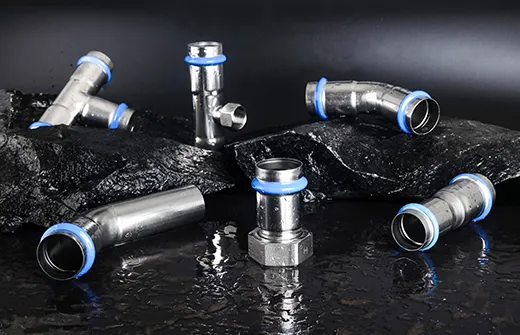
Essential Insights into Stainless Steel Tubes for Architecture and Design
Jul 16,2026
Stainless steel tubes have become a staple in the construction and decorative materials industry, particularly in architectural applications. Their unique properties, including corrosion resistance, high strength-to-weight ratio, and aesthetic appeal, make them an ideal choice for various building projects. This article delves into the essential aspects of stainless steel tubes, highlighting their benefits and considerations for use in architectural design.
One of the primary advantages of stainless steel tubes is their durability. Unlike traditional materials, stainless steel is highly resistant to corrosion, which is particularly beneficial in environments exposed to moisture or corrosive agents. This characteristic not only extends the lifespan of the materials but also reduces maintenance costs over time. In architectural applications, where aesthetics and longevity are paramount, using stainless steel tubes often results in a more sustainable choice.
In addition to their durability, stainless steel tubes offer exceptional versatility. They can be easily formed into different shapes and sizes, making them suitable for a wide range of architectural designs. Whether used for structural support, decorative elements, or handrails, their adaptability allows architects and designers to push the boundaries of creativity. Moreover, stainless steel can be finished in various ways—polished, brushed, or coated—enabling further customization to meet specific design requirements.
When considering the installation of stainless steel tubes, it is essential to evaluate their mechanical properties. The material exhibits a high tensile strength, making it capable of supporting substantial loads without bending or deforming. This ensures that structures remain secure and stable over time. Additionally, lightweight stainless steel tubes can reduce the overall weight of installations, facilitating easier handling and installation processes.
However, it is crucial to acknowledge the potential drawbacks when selecting stainless steel tubes for construction purposes. The initial cost of stainless steel is often higher than that of alternative materials, which may pose budgetary challenges for some projects. Nonetheless, the long-term benefits, such as reduced maintenance and replacement costs, often justify this initial investment.
Another consideration is the thermal conductivity of stainless steel. While stainless steel does conduct heat, its low thermal conductivity can be an advantage in certain architectural applications, preventing rapid heat loss or gain and contributing to energy efficiency.
In conclusion, stainless steel tubes present numerous advantages for architectural and decorative applications within the construction industry. Their unparalleled durability, aesthetic flexibility, and mechanical robustness make them a preferred choice for modern builders and designers. By understanding the properties and applications of stainless steel tubes, professionals can make informed decisions that lead to successful, lasting structures.
One of the primary advantages of stainless steel tubes is their durability. Unlike traditional materials, stainless steel is highly resistant to corrosion, which is particularly beneficial in environments exposed to moisture or corrosive agents. This characteristic not only extends the lifespan of the materials but also reduces maintenance costs over time. In architectural applications, where aesthetics and longevity are paramount, using stainless steel tubes often results in a more sustainable choice.
In addition to their durability, stainless steel tubes offer exceptional versatility. They can be easily formed into different shapes and sizes, making them suitable for a wide range of architectural designs. Whether used for structural support, decorative elements, or handrails, their adaptability allows architects and designers to push the boundaries of creativity. Moreover, stainless steel can be finished in various ways—polished, brushed, or coated—enabling further customization to meet specific design requirements.
When considering the installation of stainless steel tubes, it is essential to evaluate their mechanical properties. The material exhibits a high tensile strength, making it capable of supporting substantial loads without bending or deforming. This ensures that structures remain secure and stable over time. Additionally, lightweight stainless steel tubes can reduce the overall weight of installations, facilitating easier handling and installation processes.
However, it is crucial to acknowledge the potential drawbacks when selecting stainless steel tubes for construction purposes. The initial cost of stainless steel is often higher than that of alternative materials, which may pose budgetary challenges for some projects. Nonetheless, the long-term benefits, such as reduced maintenance and replacement costs, often justify this initial investment.
Another consideration is the thermal conductivity of stainless steel. While stainless steel does conduct heat, its low thermal conductivity can be an advantage in certain architectural applications, preventing rapid heat loss or gain and contributing to energy efficiency.
In conclusion, stainless steel tubes present numerous advantages for architectural and decorative applications within the construction industry. Their unparalleled durability, aesthetic flexibility, and mechanical robustness make them a preferred choice for modern builders and designers. By understanding the properties and applications of stainless steel tubes, professionals can make informed decisions that lead to successful, lasting structures.
Latest News


Contact Information
Mobile/WeChat: +8613396691363
WhatsApp: +8613396691363
E-mail: warrior.wang@zjipcpiping.com
Address:Floor 47, Building A, International Trade Center, Ningbo Chamber of Commerce, No.558 of Taikangzhong Road, Yinzhou District, Ningbo, 315100 China
Follow Us on


SAF Coolest v1.3.1.1 设置面板 JPMSX-AVEW-UZZVE-ZSA
违禁词: 第一,最,一流,领先,独一无二,王者,龙头,领导者,极致,
无数据提示
Sorry, the current column is being updated, please stay tuned!
You can view other columns or return to the HOME